
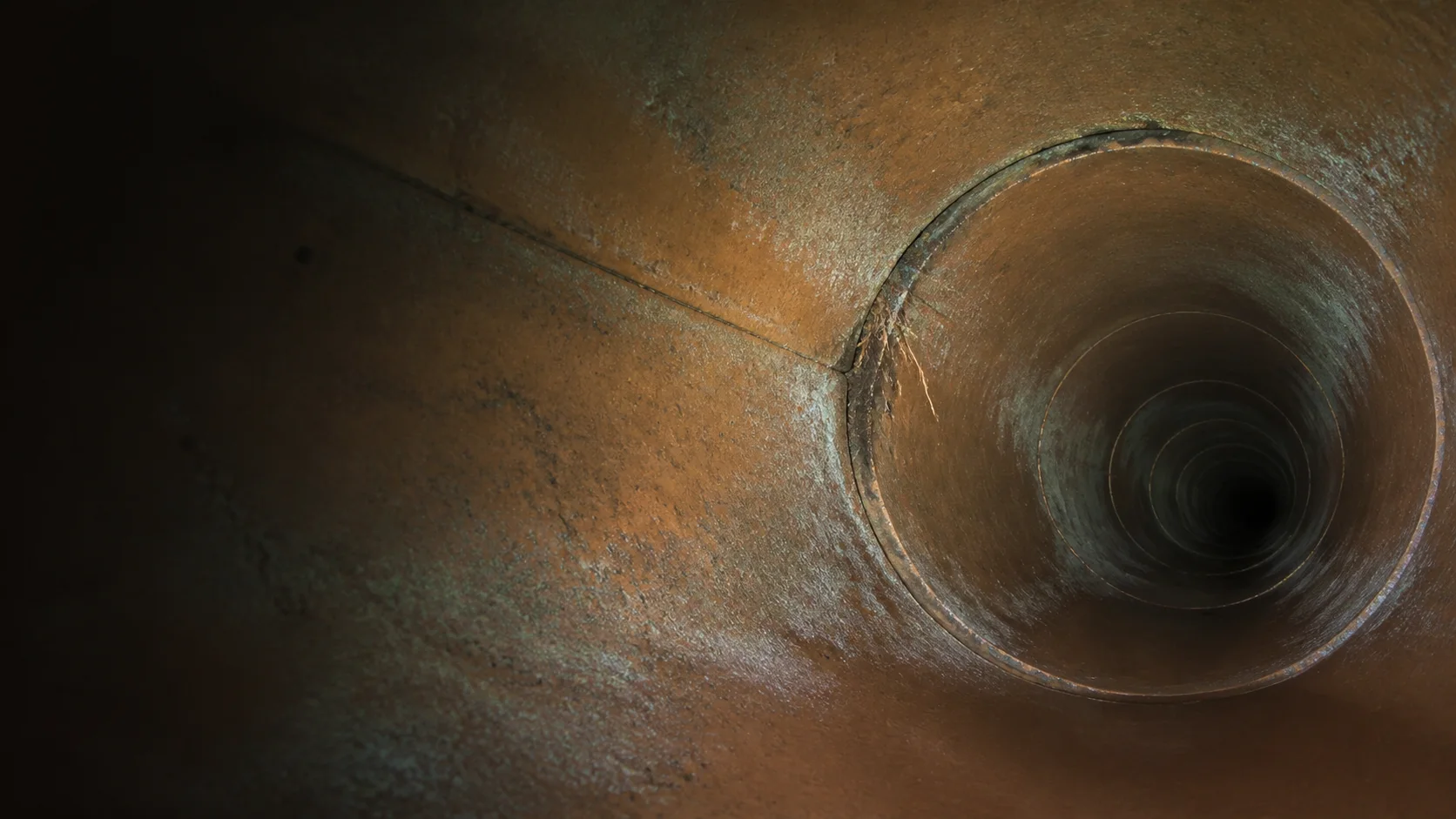
Trenchless sewer repair
in Greater Victoria.
Compare pipe condition, access, repair methods, municipal boundaries, and the property features above the line before a scope is selected.
Move your pointer to inspect below the surface. Scroll to enter the line.
Victoria planning guide / 01
The line is underground.
The decision shouldn't be.
Recurring backups can invite a fast, one-size-fits-all answer. A defensible scope starts with what can be documented: the accessible route, pipe material, visible defect type and location, utilities, ownership boundary, and the property features worth protecting.
Interactive evidence lab / 02
Turn symptoms into the next useful evidence.
Use this planning tool to organize what you know before an assessment. It is deliberately cautious: no repair is prescribed without seeing the line.
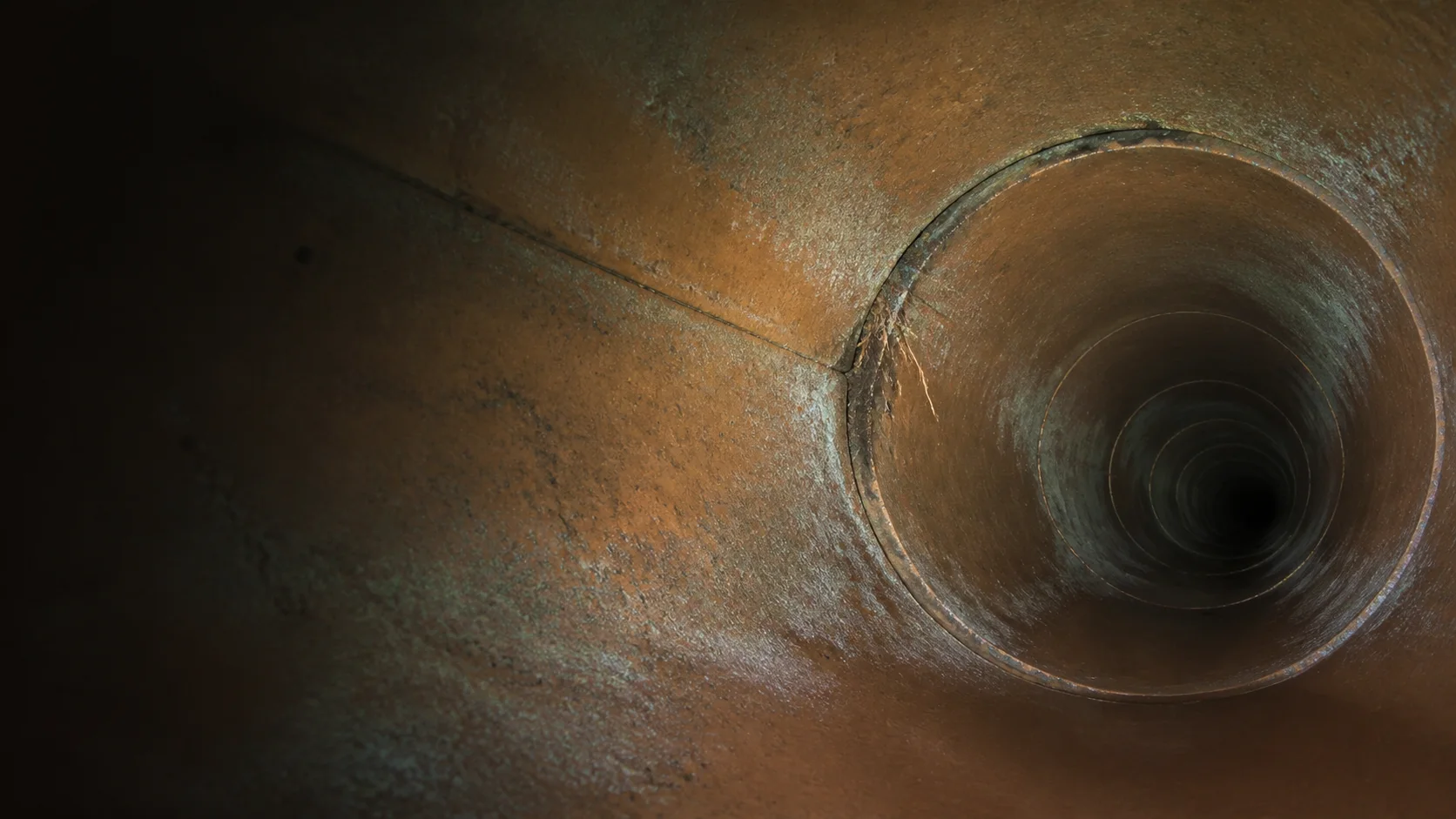
How the evidence moves
Trace the line
Record the accessible route, cleanouts, material changes, ownership boundary, utilities, and surface constraints before choosing a path.
- 01Locate
- 02Inspect
- 03Compare
- 04Repair
- 05Verify
Trenchless sewer methods / 03
Four methods.
One evidence chain.
Each method has eligible conditions and important limits. Explore its role and the evidence that should come before selection.
Pipe Lining (CIPP)
A cured liner forms inside a suitable existing sewer pipe after cleaning and inspection.
Open service brief ↗Pipe Bursting
A replacement pipe is pulled through an inspected existing route while the old pipe is split or displaced.
Open service brief ↗Sewer Camera Inspection
CCTV inspection can document visible conditions in reachable sewer sections before a repair method is selected.
Open service brief ↗Spot Repairs
A confirmed localized defect may be considered for a targeted repair instead of full-line rehabilitation.
Open service brief ↗Compare Victoria trenchless sewer repair methods
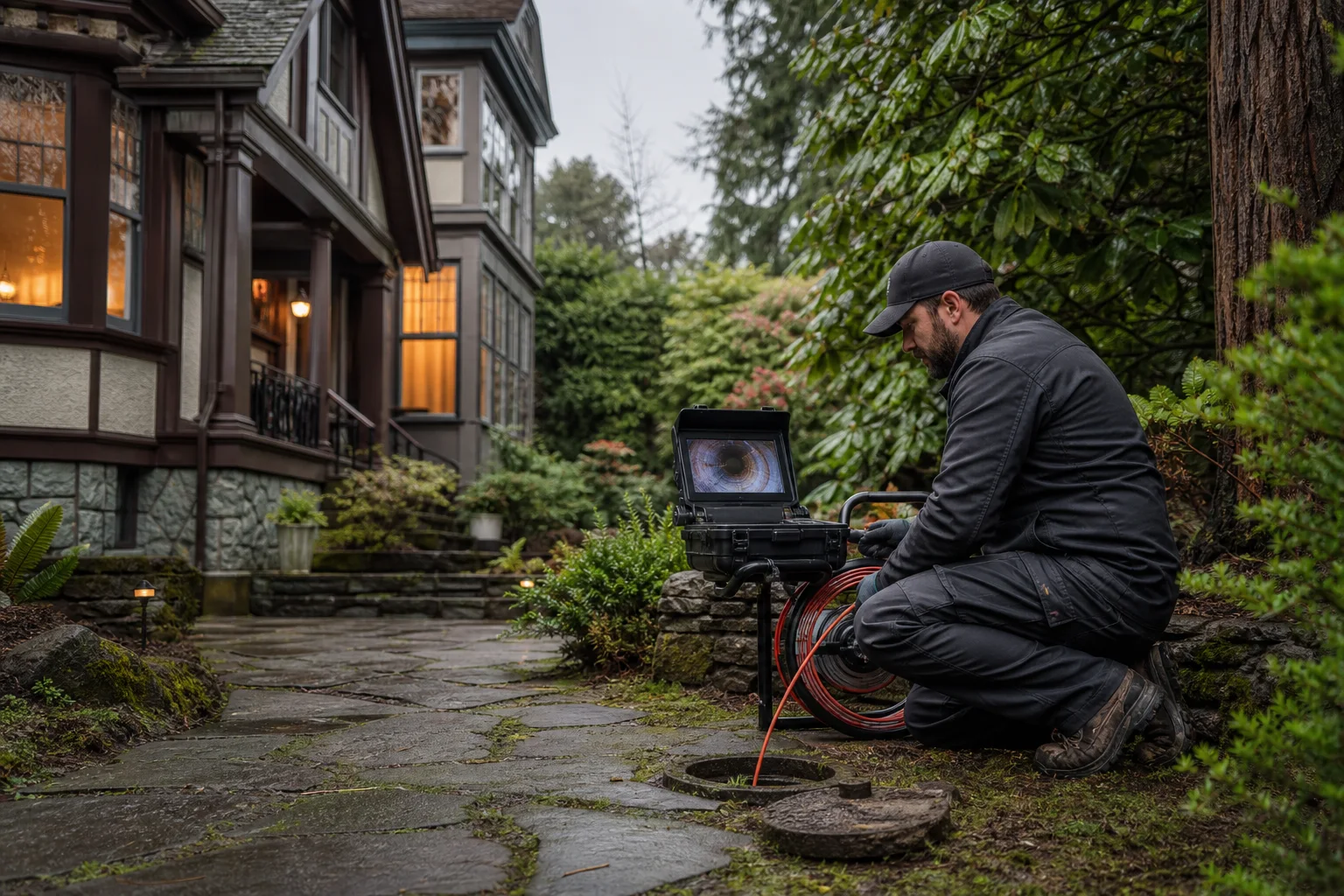
Camera inspection
Build the evidence record first: accessible run, visible pipe condition, defect type, location, and inspection limits.
Property protection / 04
The project exists above the pipe, too.
Access, gardens, driveways, retaining features, neighbours, and mature roots belong in the scope from the beginning—not as restoration surprises at the end.
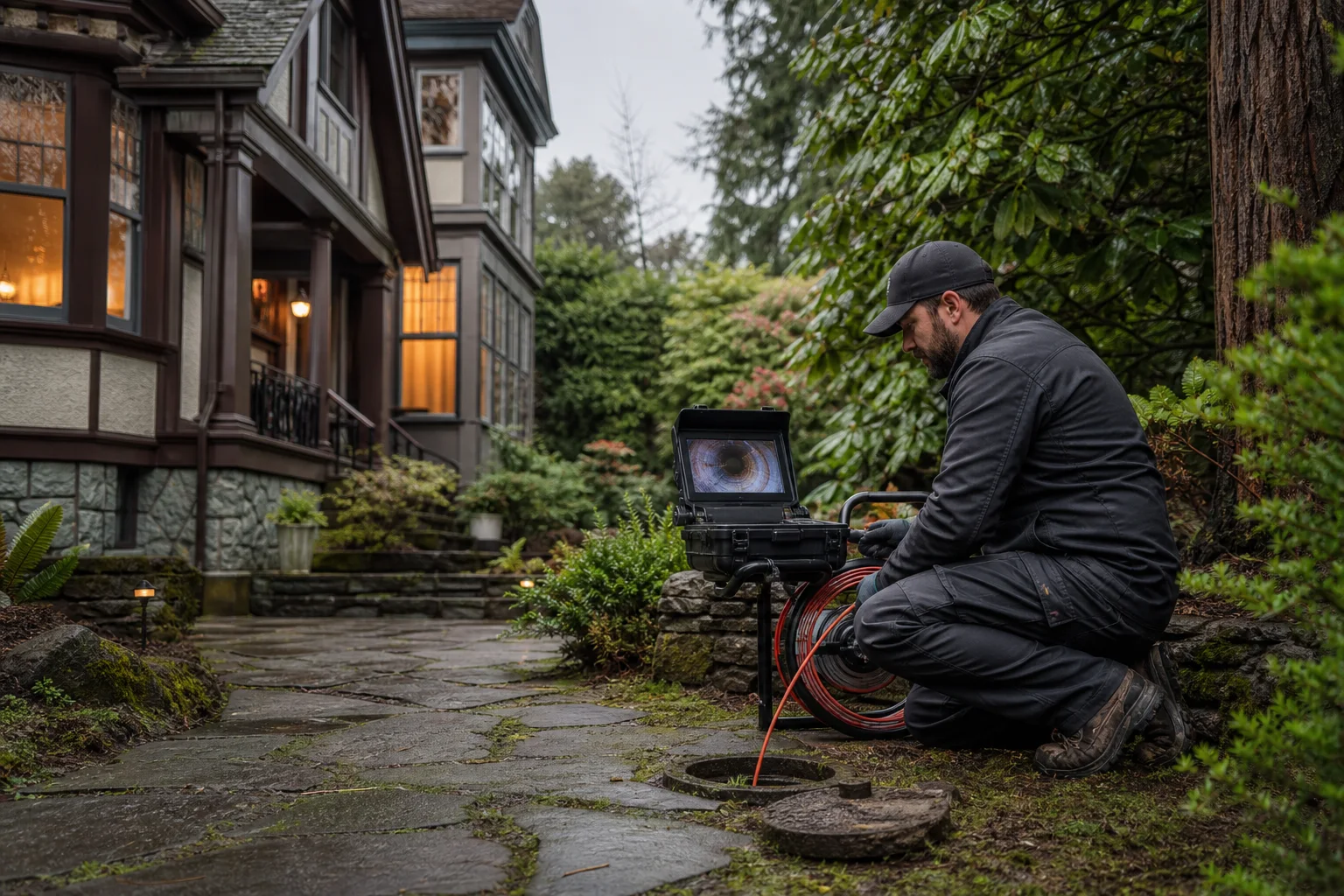
Surface constraint record
Map the property before opening it.
A disciplined scope records the features that affect access, method choice, and restoration.
- Camera findings tied to location
- Repair options compared in writing
- Access and surface impact defined up front
- Verification requirements matched to scope
Scope checklist / 05
A clearer chain from symptom to scope.
- 01Observe before selectingA sound recommendation starts with accessible camera evidence and site conditions.
- 02Compare limitsTrenchless methods should not be forced onto a line that cannot support them.
- 03Protect deliberatelySurface constraints belong in method selection and access planning.
- 04Define verificationThe approved scope should state how the repaired section will be checked.
Selected nearby municipalities
Address-specific.
Municipality-specific.
Sewer connection, ownership boundaries, permits, and provider availability must be confirmed for each address. The eight listed communities are selected context, not every Greater Victoria municipality.
See service-area contextCase notes / FAQ
Questions worth answering before work begins.
Direct answers, careful caveats, and no invented guarantees.
01How much does trenchless sewer repair cost in Victoria?+
Cost varies with pipe length and diameter, depth, access, cleaning, host-pipe condition, connections, permits, utilities, method, and restoration. Compare an itemized written scope only after the line and site constraints have been assessed.
02What affects a trenchless sewer repair schedule?+
Timing depends on inspection and cleaning, access, permits, utility locating, pipe length and condition, method, curing or pullback, reconnections, verification, and restoration. A fixed duration is not reliable before those details are known.
03How is trenchless suitability assessed?+
CCTV is one input. Access, host-pipe continuity, geometry, grade, depth, utilities, connections, ownership, and permits also matter. Collapse, sags, obstructions, or missing access can require localized or conventional excavation.
04What causes sewer line problems in Victoria?+
Observable problems can include roots entering joints or cracks, obstructions, displaced joints, corrosion, cracks, collapse, or grade defects. The cause and extent should be documented for the specific line rather than inferred from neighbourhood or climate.
05Can trenchless work avoid all excavation?+
Not always. CIPP may use existing access, while pipe bursting generally needs insertion and receiving access plus connection work. Utilities, obstructions, grade correction, missing cleanouts, and municipal boundaries can add localized excavation.
06How do I know if I need sewer repair?+
Recurring backups, multiple slow drains, gurgling fixtures, sewage odours, prior root clearing, or an inspection note can justify further investigation. CCTV may document reachable pipe, but emergency backups and public-side problems should follow the municipality's reporting guidance.
Request an assessment / final
Start with the address.
Keep evidence in scope.
Share the property and what you are noticing, or call the Victoria assessment line using the number and extension shown here.
↗ Call now(778) 764-1440 ext. 206- Short, four-field request
- No repair claim before inspection
- Clear next steps based on the available evidence